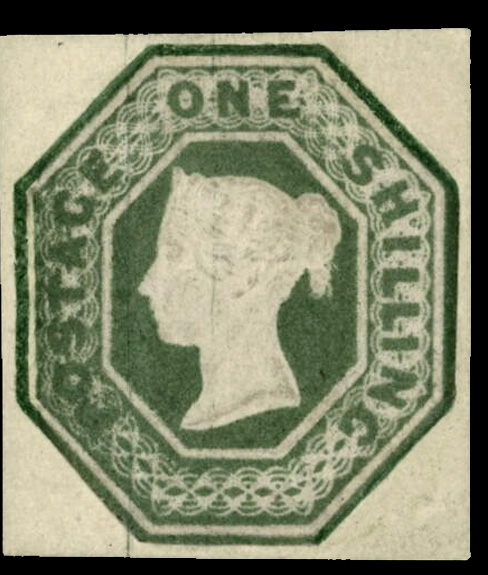
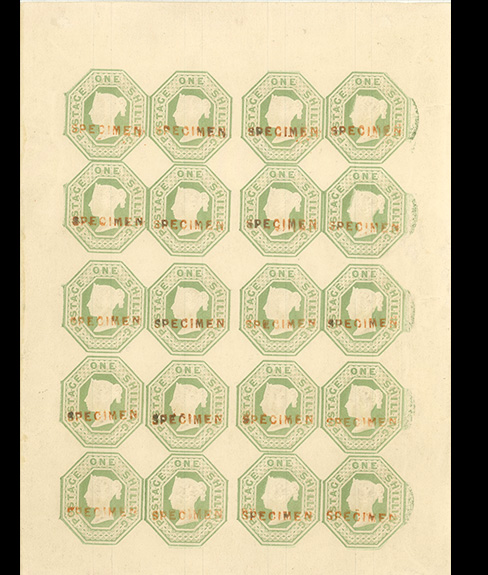
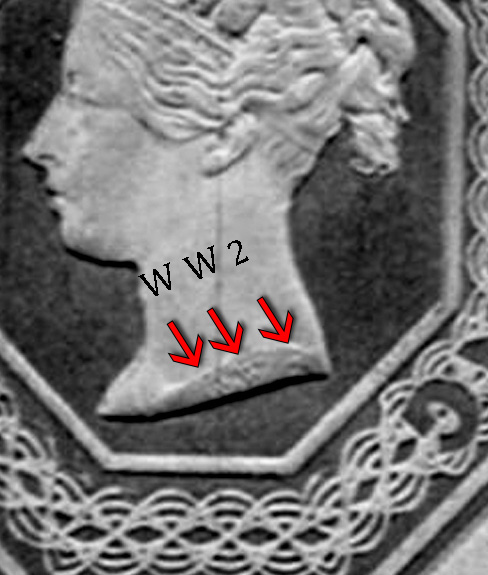
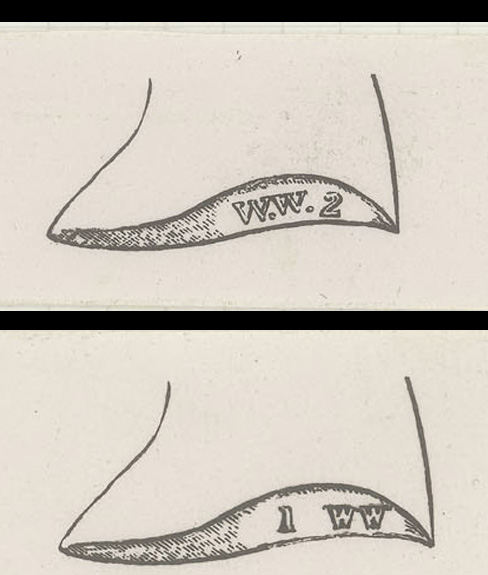
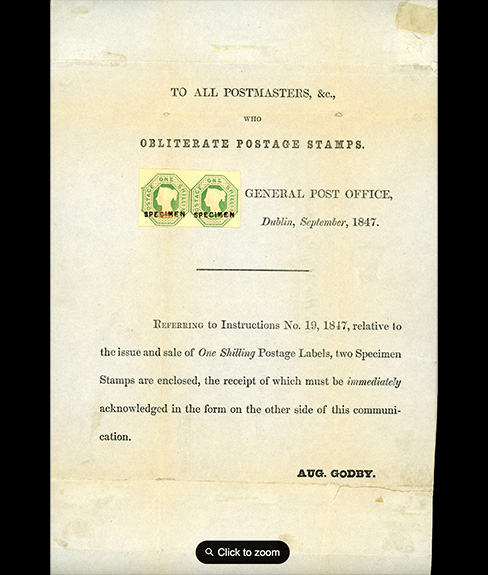
Die Numbers for Sg56: WW1 and WW2 The WW stands for William Wyon, the engraver. These letters and numbers can be faint or even invisible.
Key Details Regarding Silk Threads in GB Embossed Stamps
Usage: Applied specifically to the 10d (brown) and 1/- (green) values, not the 6d stamp.
Manufacturer: The paper was manufactured by John Dickinson.
Appearance: Two blue, vertical, silk threads were embedded into the paper during production, usually spaced 5mm apart.
Purpose: The threads acted as a security feature against counterfeiting.
Varieties: While typically 5mm apart, variations in spacing exist (e.g., 20mm), and some rare examples may only show a single thread.
Application Method: The threads were embedded into the paper as the wet pulp passed over the cylinder during the manufacturing process.
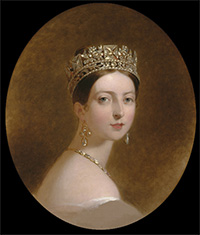
William Wyon
William Wyon engraved the head of Queen Victoria at the starting when she was 13 and finished when she was 18. His engraving was used on the line-engraved postage stamps of 1840–79, beginning with the Penny Black, the embossed stamps of 1847–54 and the postal stationery 1841–1901. His design also influenced the surface-printed stamps first printed in 1855
Key Details Regarding Silk Threads in GB Embossed Stamps
Usage: Applied specifically to the 10d (brown) and 1/- (green) values, not the 6d stamp.
Manufacturer: The paper was manufactured by John Dickinson.
Appearance: Two blue, vertical, silk threads were embedded into the paper during production, usually spaced 5mm apart.
Purpose: The threads acted as a security feature against counterfeiting.
Varieties: While typically 5mm apart, variations in spacing exist (e.g., 20mm), and some rare examples may only show a single thread.
Application Method: The threads were embedded into the paper as the wet pulp passed over the cylinder during the manufacturing process.
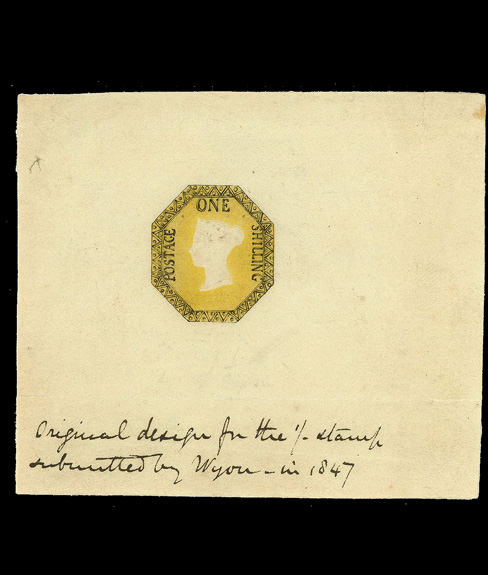
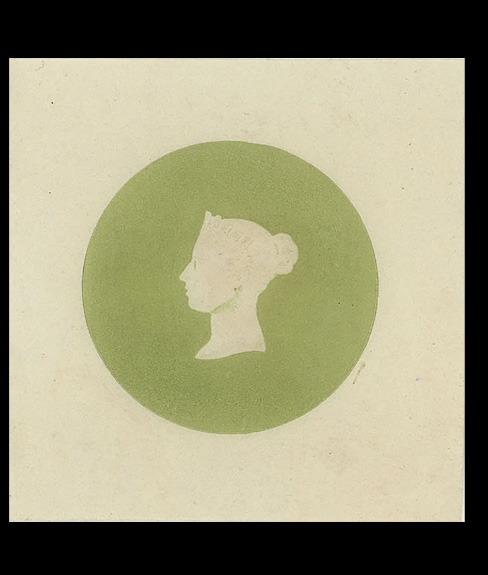
View the Essays and Proofs
Essay
Click the image to enlarge
Essay (die proof)
Click the image to enlarge
Essay
Click the image to enlarge
Colour Trial
Click the image to enlarge
What is the value of SG56?
A mint stamp that has been previoiusly hinged: £3,500-£4,000 A used stamp: £30-£75 A used stamp cut to shape: £18-£25