> Scroll Down <

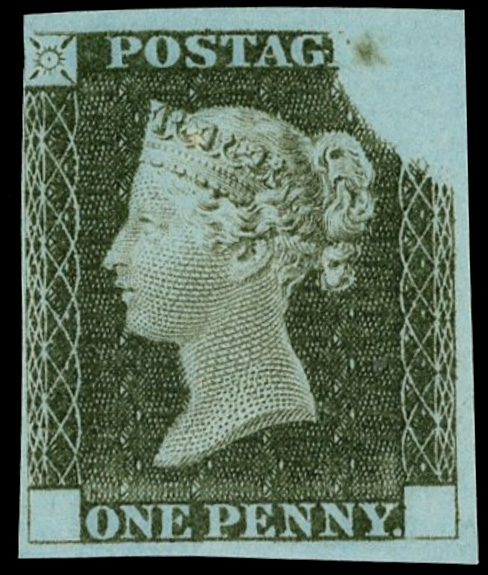
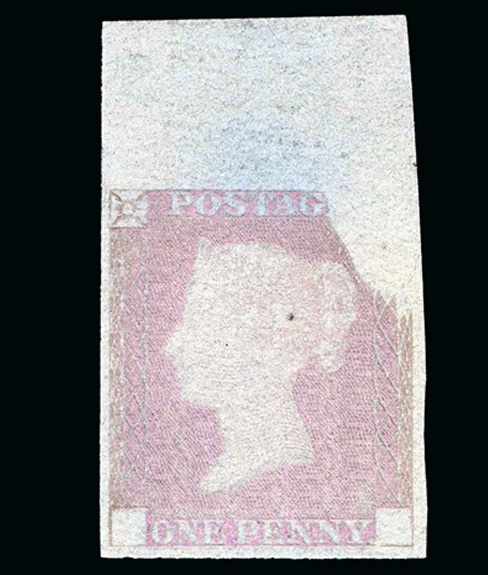
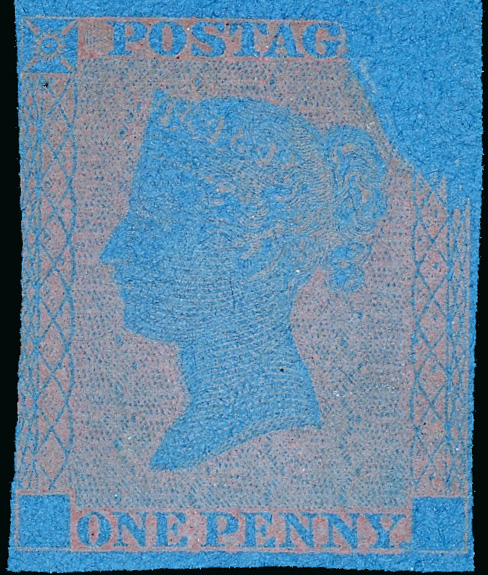
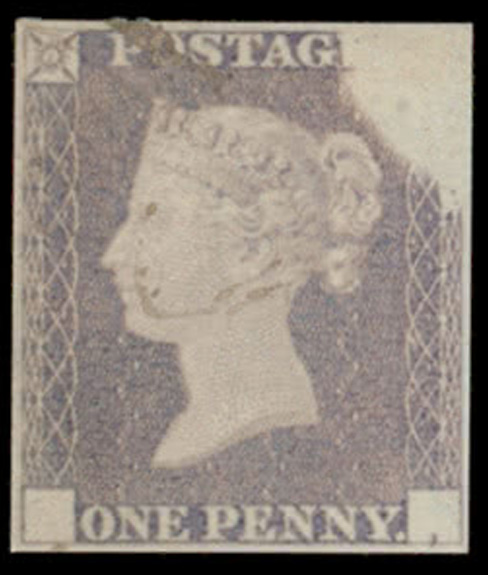
SG 1

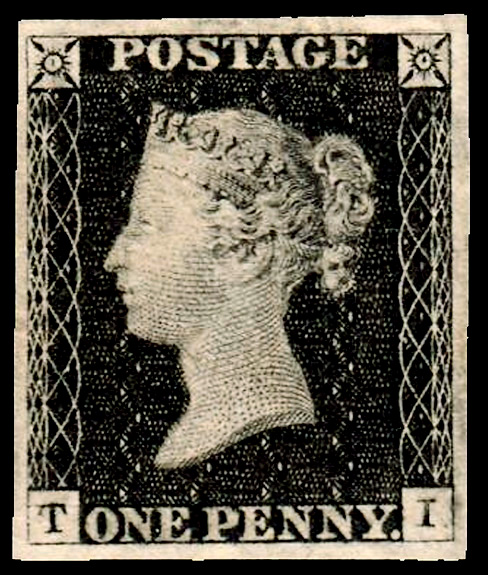
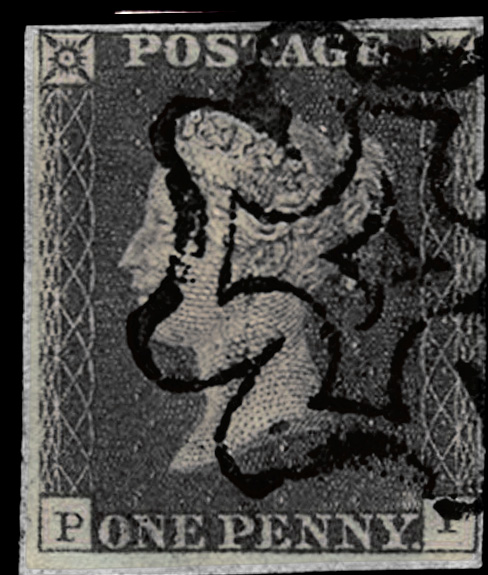
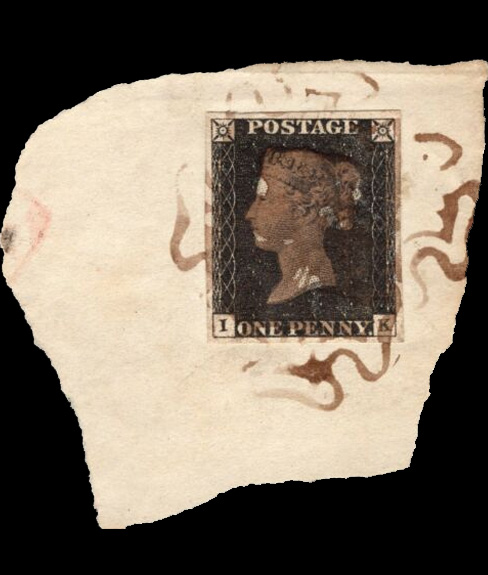
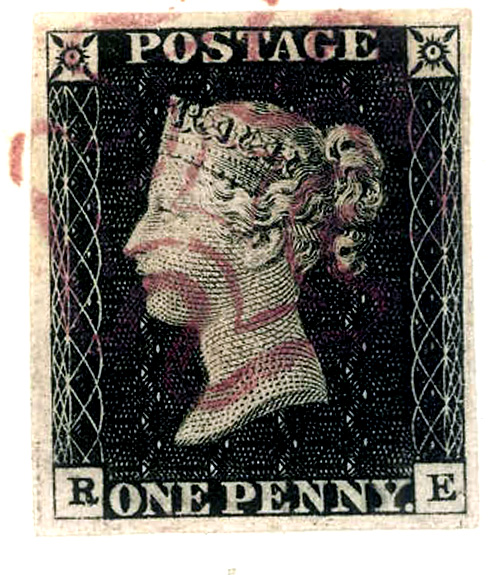
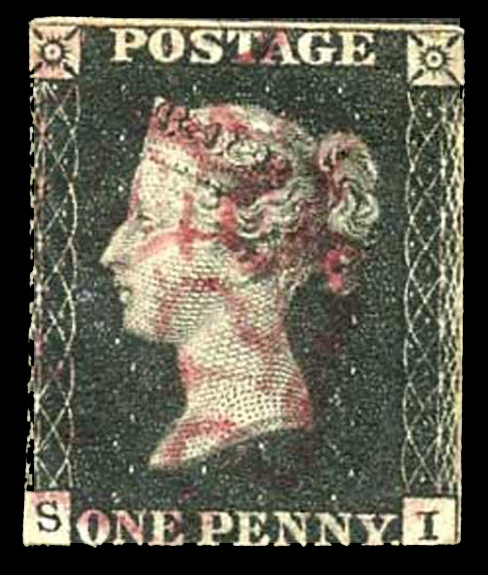
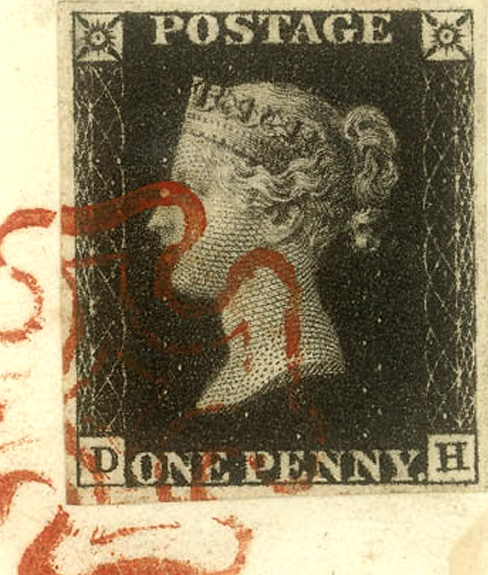
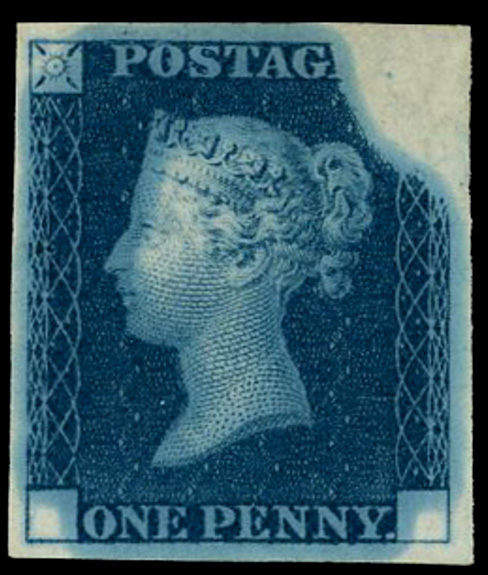
1840 Intense Black

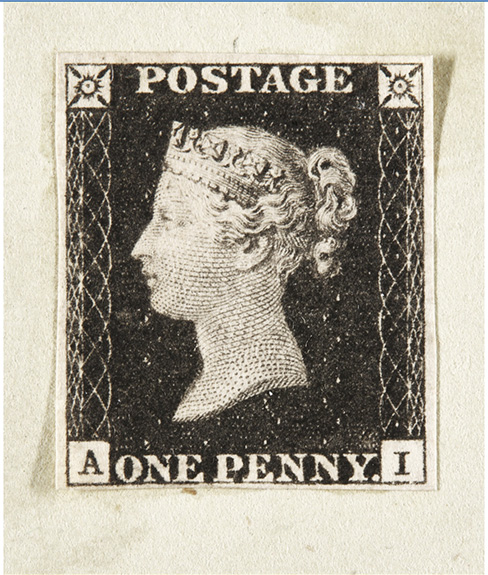
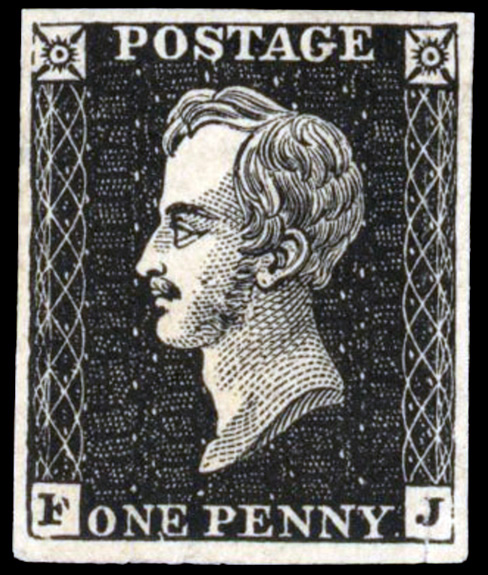
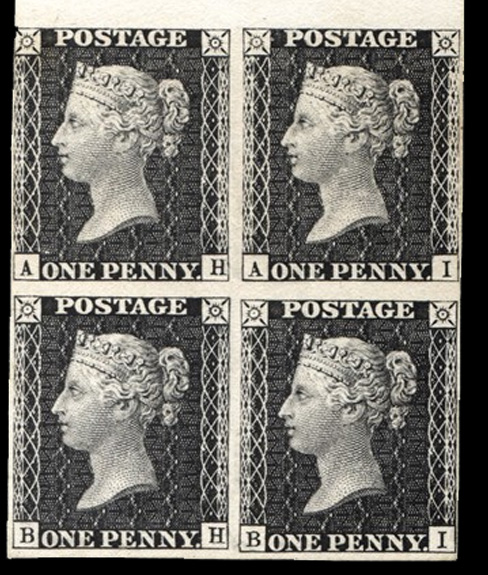
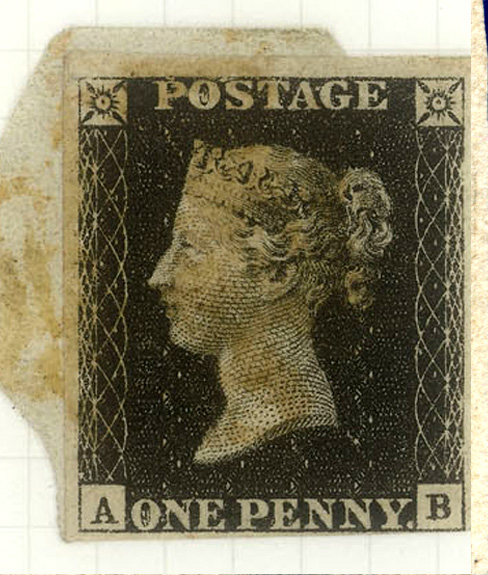
Earliest known example Plate 1a Lettered AI
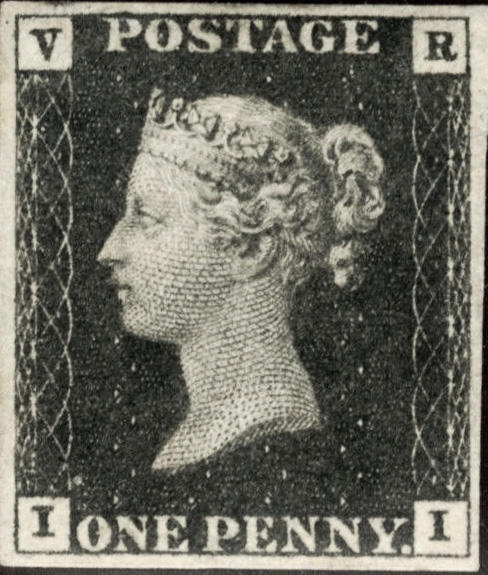
Click the image to enlarge

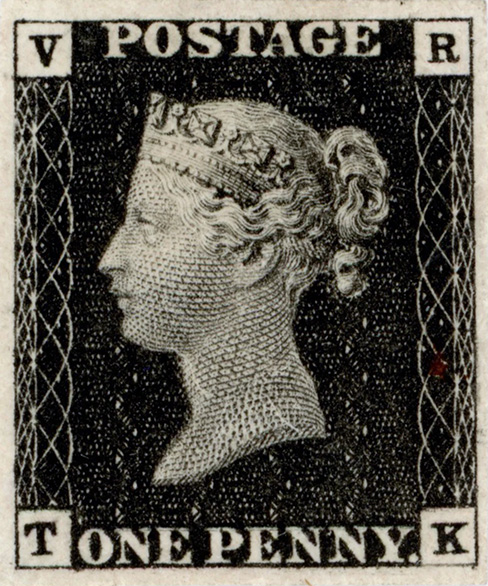
Victoria Regina (VR)

Click the image to enlarge

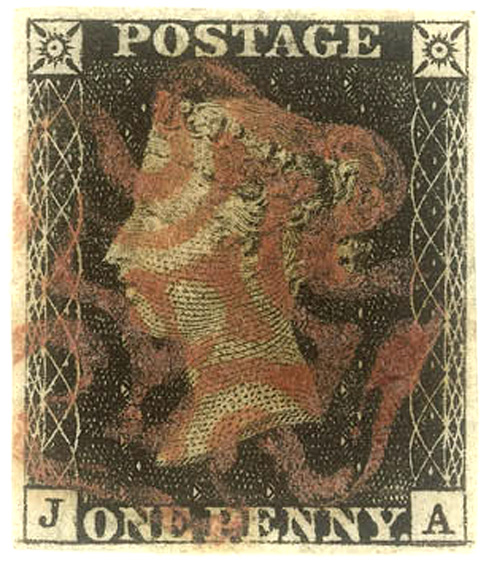
VR cancel

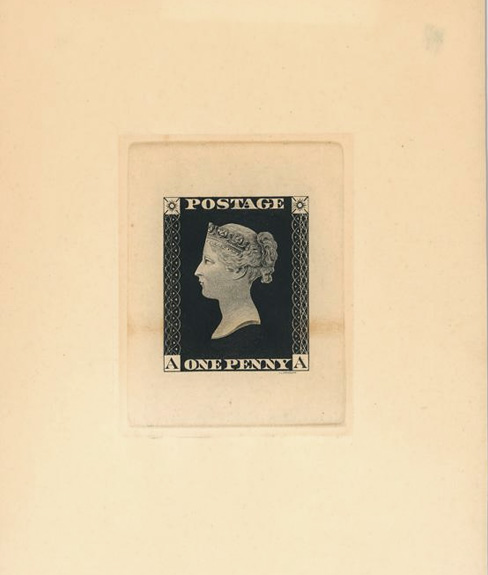
Imprimatur

Click the image to enlarge

VR Imprimatur

Click the image to enlarge

Plates 1-10 vs 11

Click the image to enlarge

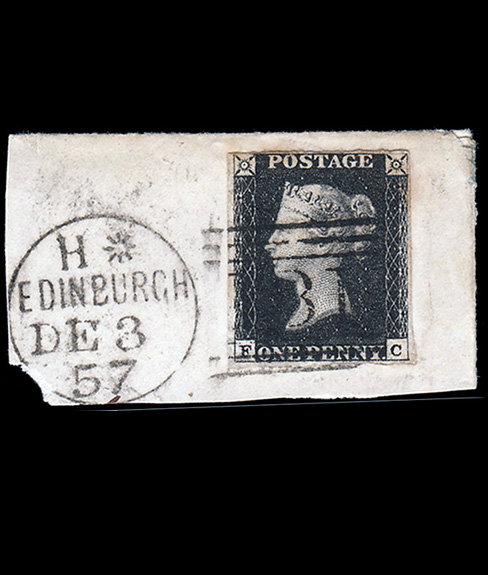
Late Usage (12/1857)

Announcement

Click the image to enlarge

Earliest use on an envelope
5/2/1840

Click the image to enlarge

Forgery

Click the image to enlarge

DD Flaw

Click the image to enlarge

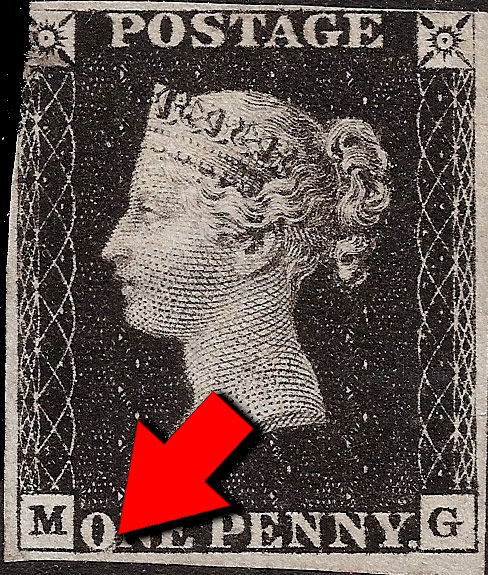
O Flaw

Click the image to enlarge

Watermark

Small Crown

Watermark

Small Crown

In depth knowledge

Plate Numbers for SG1 and quantity printed:
1a/1b - 10,052,400 (includes SG1)
2 - 7,659,120 (includes SG1)
3 - 4,786,800
4 - 6,701,760 (includes SG1)
5 - 8,616,480 (includes SG1)
6 - 9,095,040 (includes SG1)
7 - 8,137,680
8 - 7,180, 320
9 - 3,840,000
10 - 1,920,000
11 - 168,000

The Birth of the First Stamp

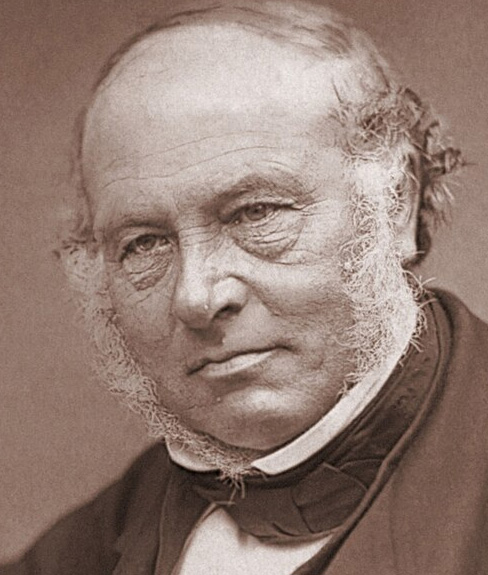
Rowland Hill

Rowland Hills booklet
“Post Office Reform"

Click the image to enlarge

Design was based on the ‘Wyon’ Medal

Click the image to enlarge

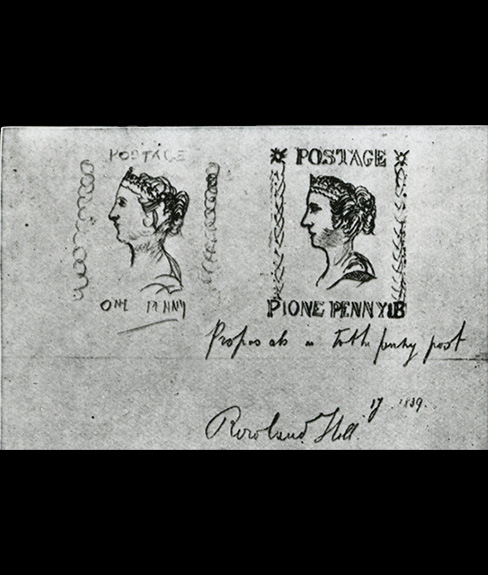
Roland Hill’s initial sketches

Click the image to enlarge

Early Proof

Click the image to enlarge

The Master Die

Click the image to enlarge

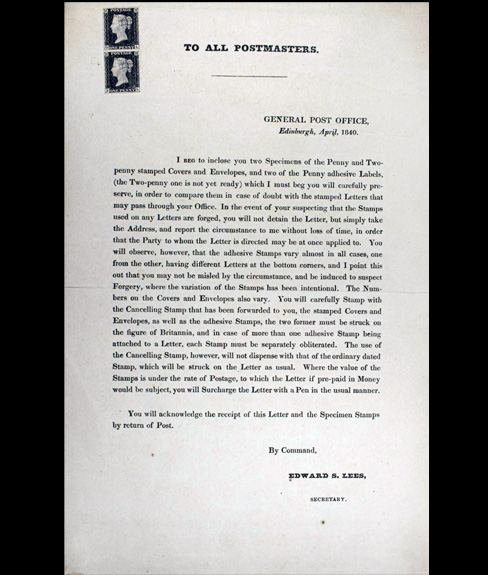
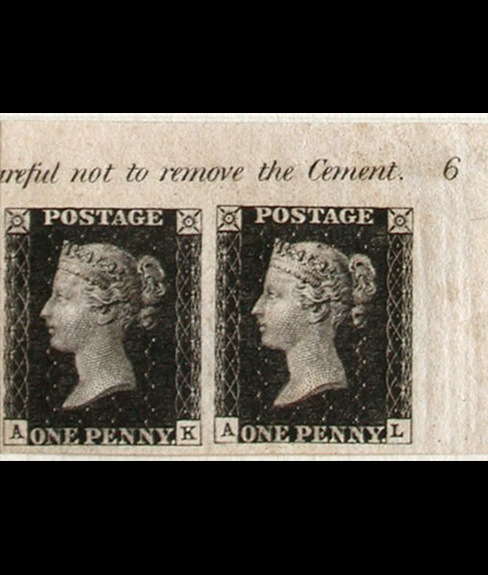
Advice to Post Masters

Click the image to enlarge

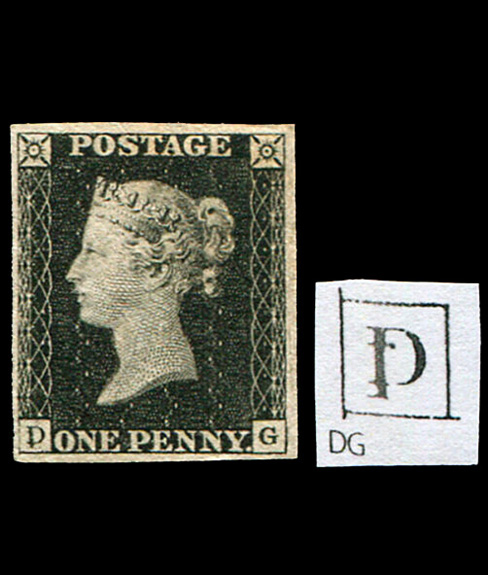
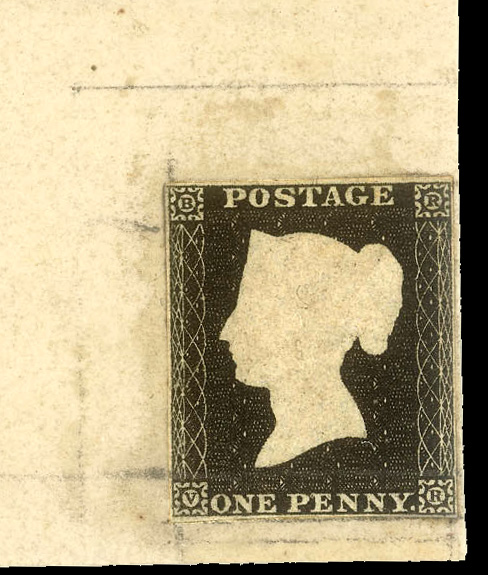
The first stamp

Click the image to enlarge

Die Proofs and Essays

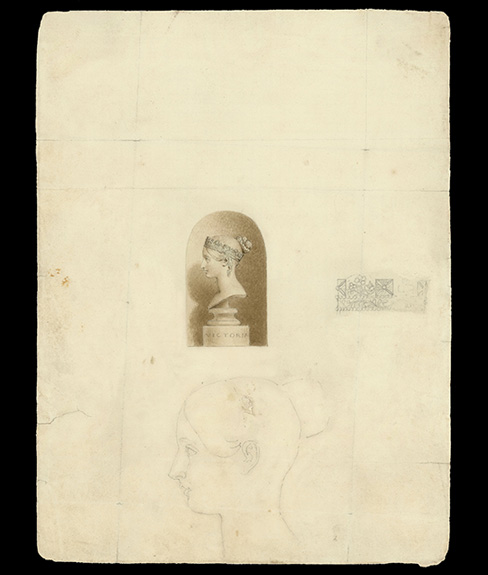
Essay for the bust

Click the image to enlarge

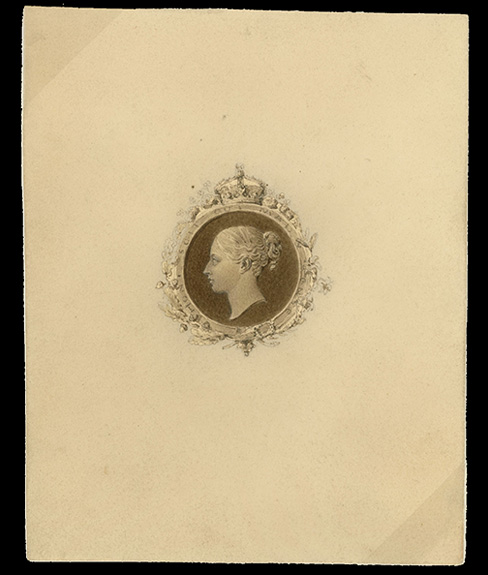
Essay for the portrait

Click the image to enlarge

Die for
the Back-ground

Click the image to enlarge

Die with blank corners

Click the image to enlarge

Die with stars at top

Click the image to enlarge

The Master Die

Click the image to enlarge

Print from the Master Die

Click the image to enlarge

Plate 6 Die Proof

Click the image to enlarge

Proof from January 1840

Click the image to enlarge

Proof from January 1840 with proposed replacement

Click the image to enlarge

Prince Consort Essay

Click the image to enlarge

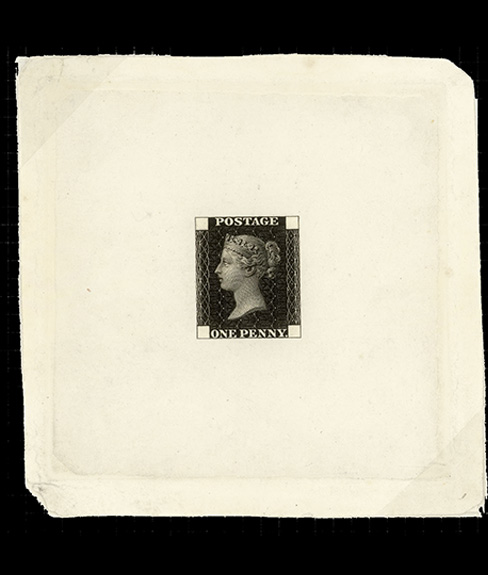
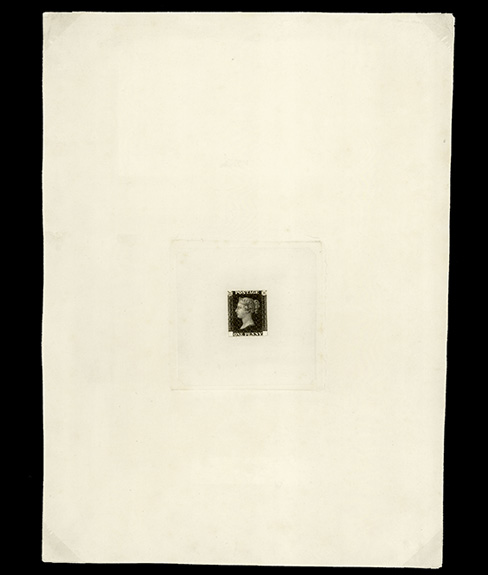
Die Proof on heavy bond with full die-sinkage

Click the image to enlarge

South Kensington Exhibition Proof

Click the image to enlarge

VR Proof

Click the image to enlarge

The Final Proof

Click the image to enlarge

Over-inked Die Proof

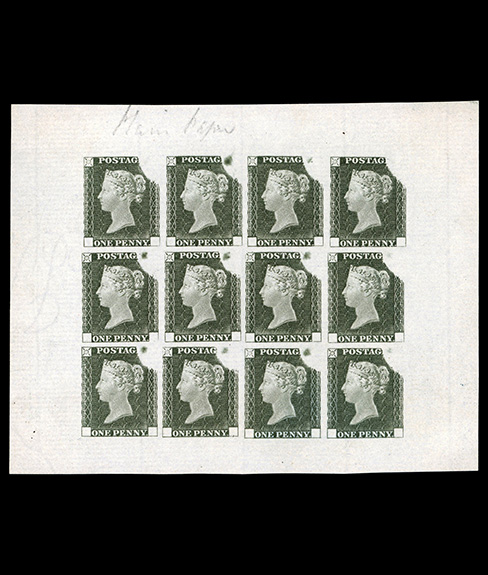
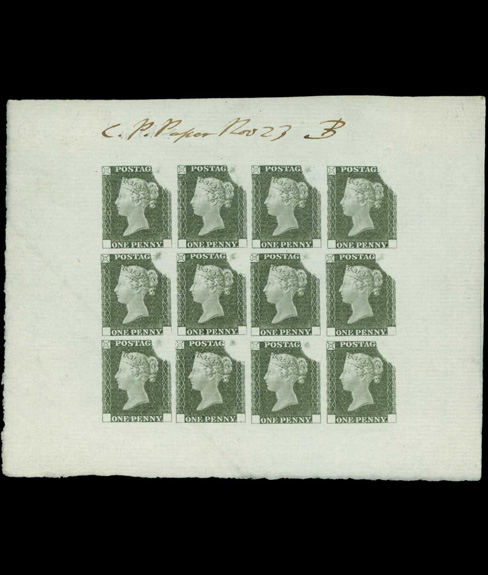
Proof sheet

Click the image to enlarge

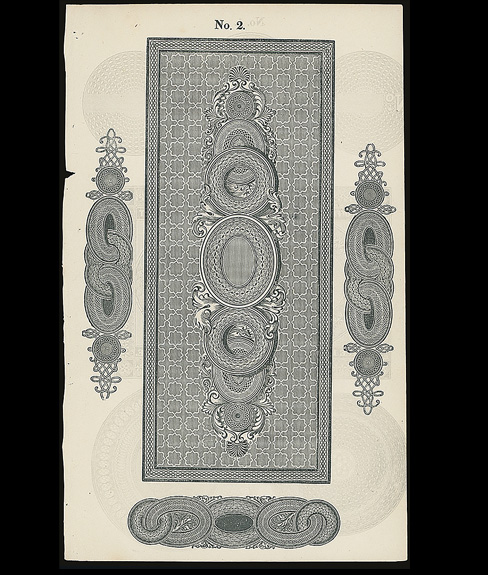
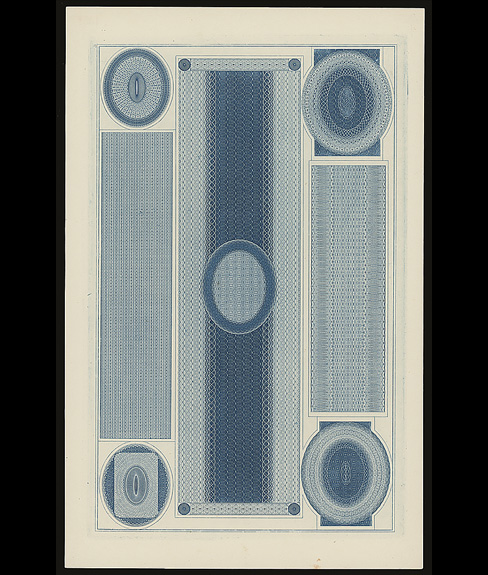
Perkins Bacon Back-ground Essay

Click the image to enlarge

Perkins Bacon Back-ground Essay

Click the image to enlarge

Perkins Bacon Back-ground Essay

Click the image to enlarge

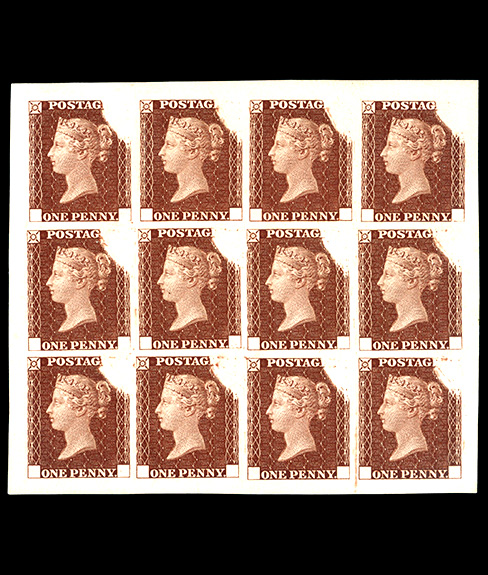
View a Full Sheet

Click the image to enlarge

What is the value of SG1?

Prices are for four margin unplated stamps
A mint stamp that has been previoiusly hinged with gum: £1,100-£1,700
A mint stamp that has been previoiusly hinged with no gum: £750-£1,000
A used stamp: £90-£190

The Rainbow Trials

First Trial - Lilac-Brown

State 1 - Black

State 1 - Black Sheet

Click the image to enlarge

State 1 - Black Sheet

Click the image to enlarge

State 1 - Reddish-brown

State 1 - Red Sheet

Click the image to enlarge

State 2
Olive on green paper

State 2 - Rose

State 2 Lilac-pink
on blue potash paper

State 2 Lilac-pink
on white paper

State 2 Lilac-rose
on blue potash paper

State 2 Rose
on blued paper

State 3 - Blue Green

State 3 - Olive Green

State 3
Olive Green Sheet

Click the image to enlarge

State 3 - Rosy-mauve

State 3 - Red-brown

State 3 - Reddish-brown

State 3 - Blue

"The Rainbow Trials" refers to a series of historic stamp colour experiments conducted in Britain in 1840, not a specific set of stamps issued for public use. These trials were instrumental in the transition from the Penny Black to the Penny Red stamp.

Purpose of the Trials
The "Rainbow Trials" were initiated by Rowland Hill and other General Post Office officials to address a significant security flaw in the world's first adhesive stamp, the Penny Black.
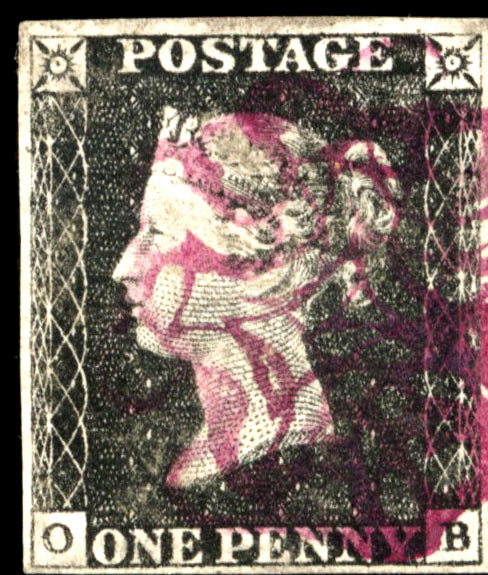
The problem: The red cancellation mark on the black stamp was found to be easily removable using chemical agents, allowing the stamps to be reused fraudulently.
The solution: Experiments were conducted to find a combination of stamp and cancellation ink that would be more secure. Different colours and various "fugitive" inks (inks that would run or react with chemicals) were tested.
The outcome: The trials determined that printing the stamp in a colour that was difficult to clean, such as red, and using a black cancellation mark would make any attempt at reuse clearly visible. This led to the introduction of the Penny Red stamp in February 1841.

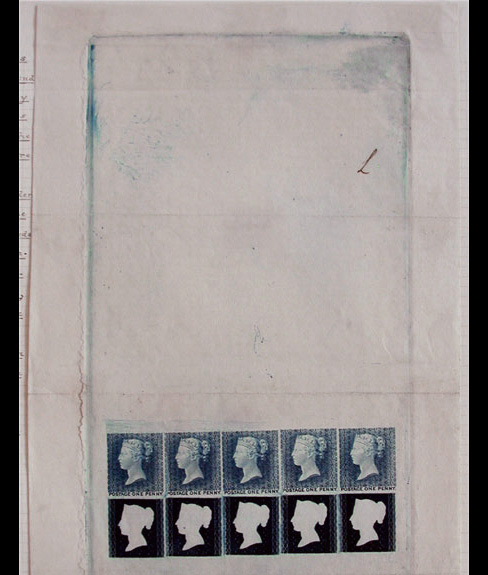
The States of Impressions of the Second Trial Plate
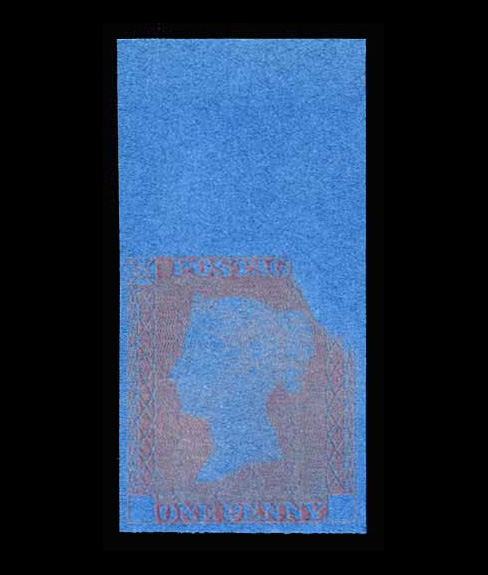
State 1: These are the initial proofs, appearing in black, orange-red, reddish-brown, and deep blue. They feature voided corner squares.
State 2: Almost identical to State 1, but with a specific, small mark added to the bottom right corner square of the second stamp in the third row. These are sometimes found on watermarked laid paper.
State 3: Distinguished by the rougher, more pronounced edges of the voided corners. In this state, the impressions were re-entered, and the corners were voided more carefully, resulting in smaller and more uniform, yet often "thinner" looking, corner squares.

This plate was used to test numerous inks (including prussiate of potash) and papers to find a "fugitive" ink that would destroy the stamp if the cancellation was removed.

The Ormond Hill Die Proofs

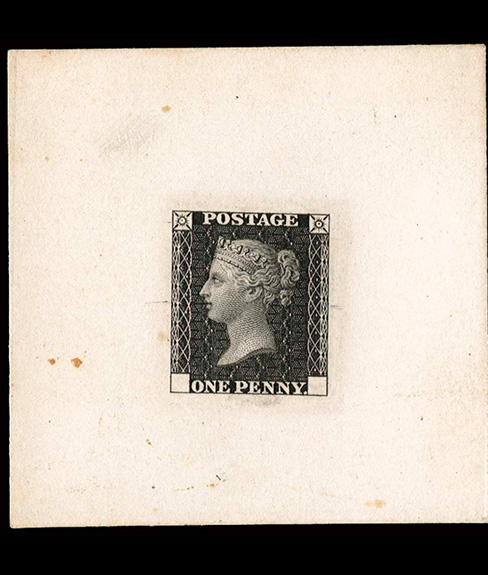
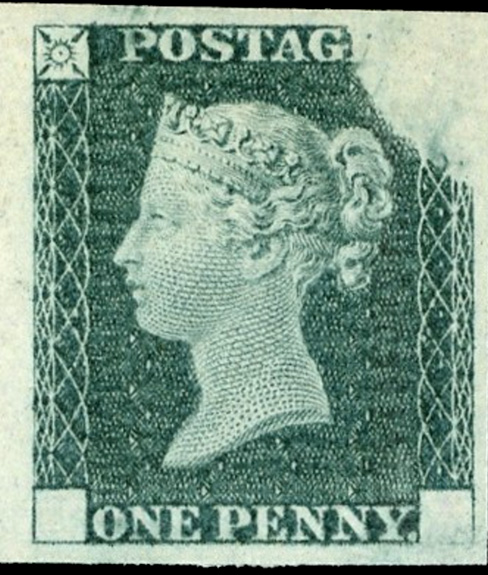
Die Proof in Black

Click the image to enlarge

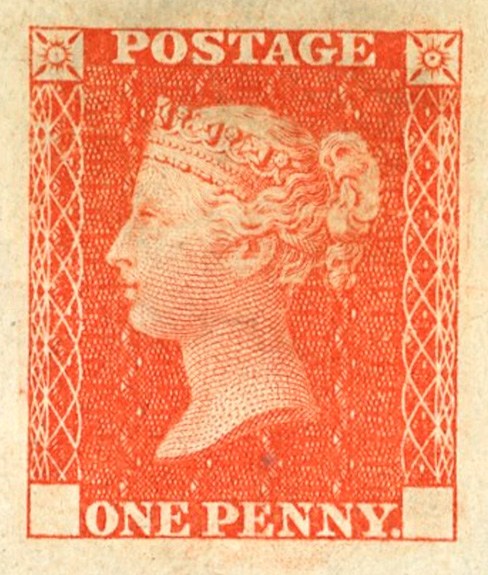
Die Proof in Orange

Click the image to enlarge

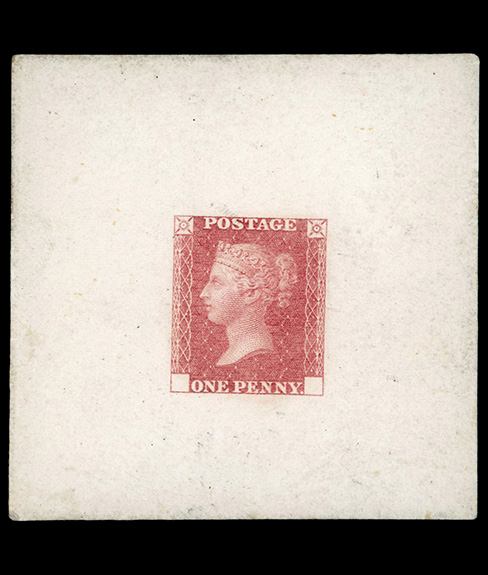
Die Proof in Carmine

Click the image to enlarge

Die Proof in Prussian Blue

Click the image to enlarge

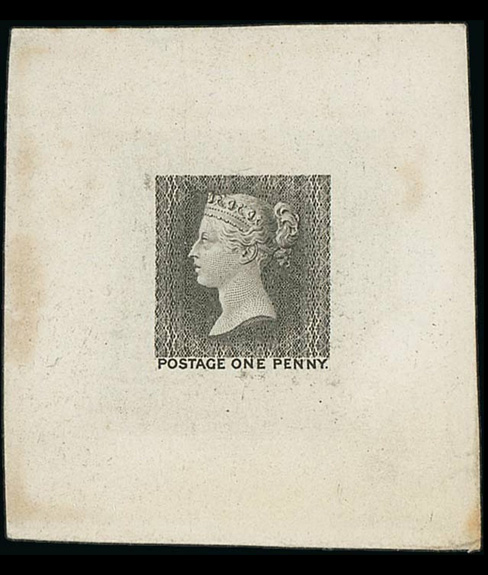
Die Proof of rejected design in black

Click the image to enlarge

Die Proof of rejected design in green

Click the image to enlarge

Ormond Hill was the nephew of Sir Rowland Hill. He served as the Comptroller of the Stamping Department at Somerset House, a key position in the production process of early British postage stamps.

Key aspects of Ormond Hill's involvement include:
Die Proofs: He approved or commented on various stamp designs and proofs, and his name is often associated with rare, early "die proofs" of stamps from around 1871.
"Cancelled" Stamps: In a famous incident that led to the end of the printer Perkins Bacon's contract, Ormond Hill requested some cancelled stamps for his friends in 1861, which were produced without proper authority, creating a major philatelic rarity.

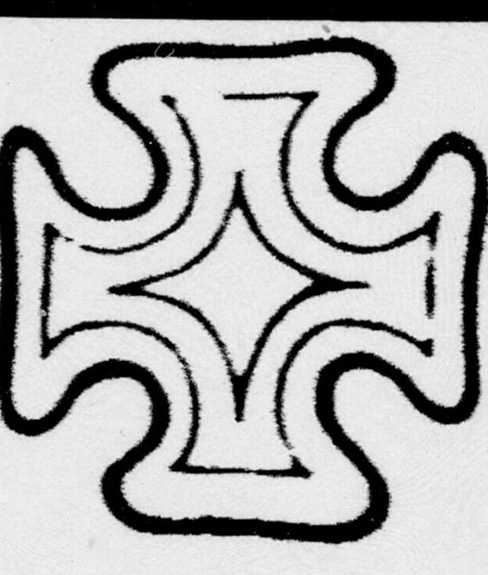
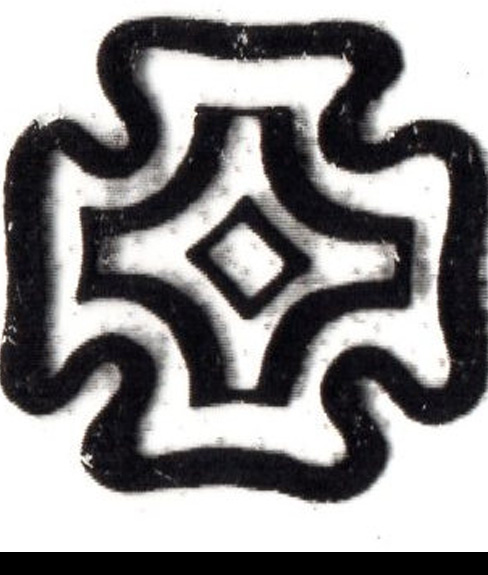
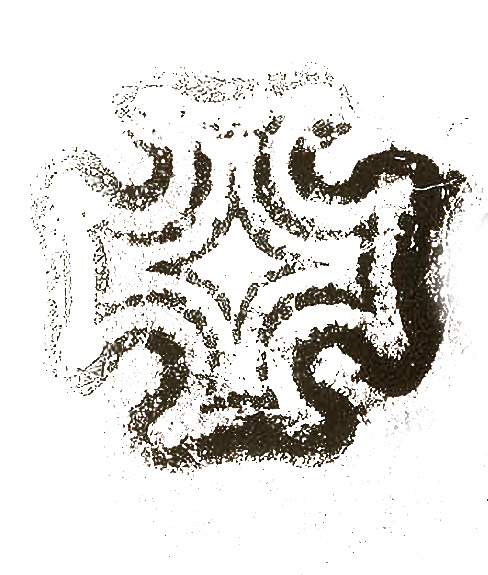
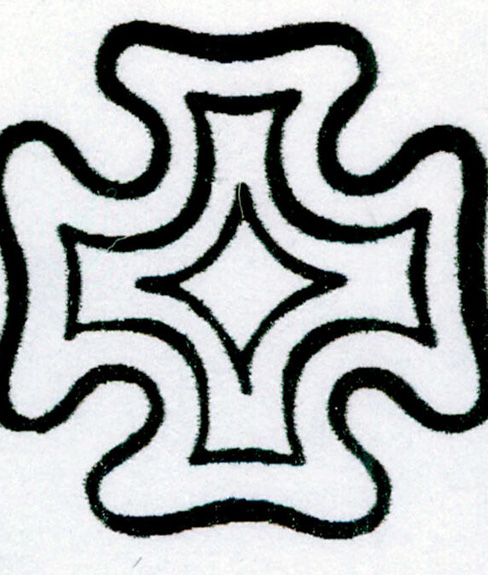
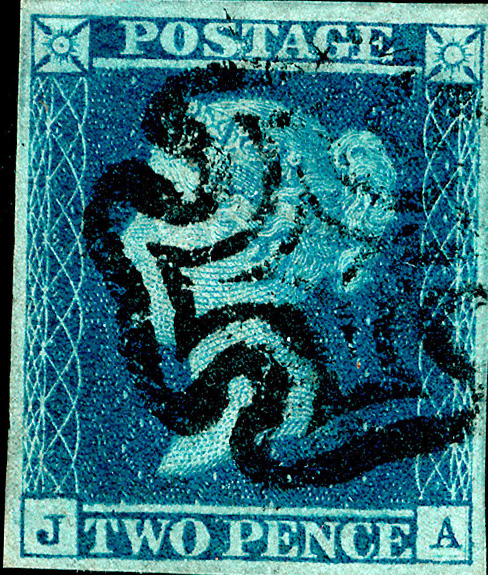
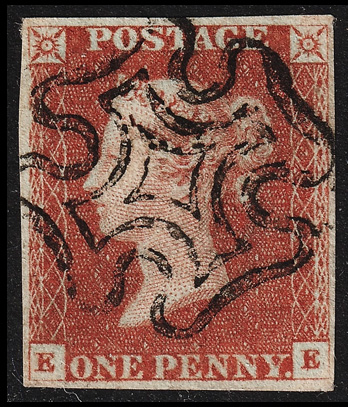
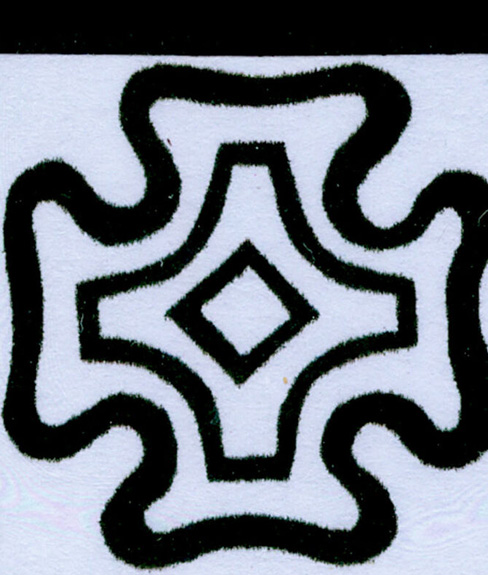
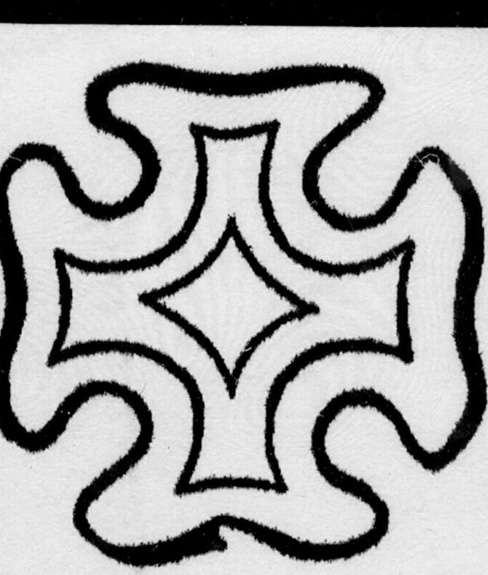
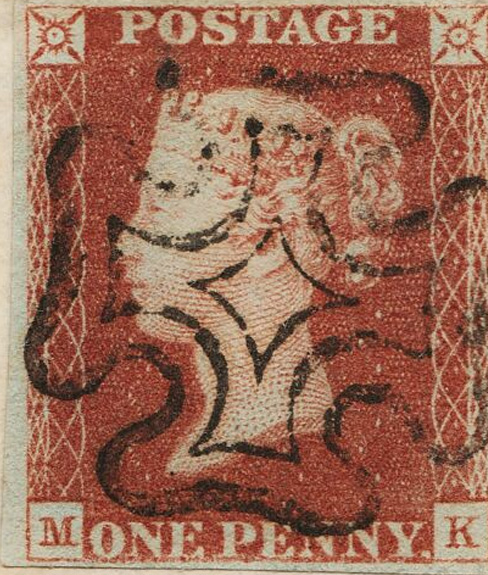
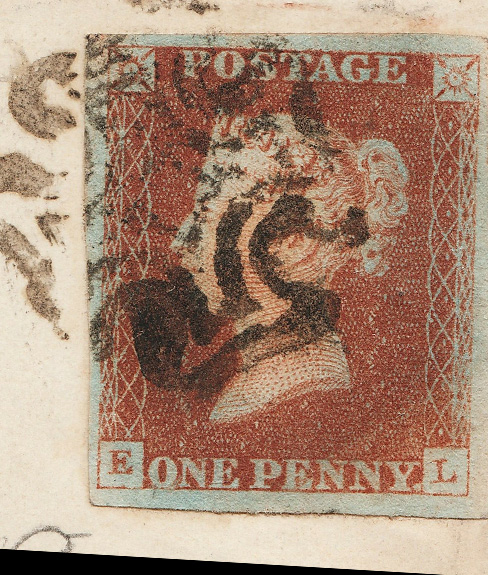
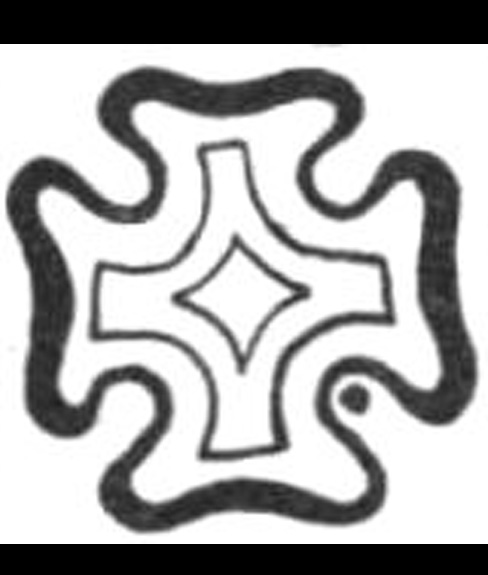
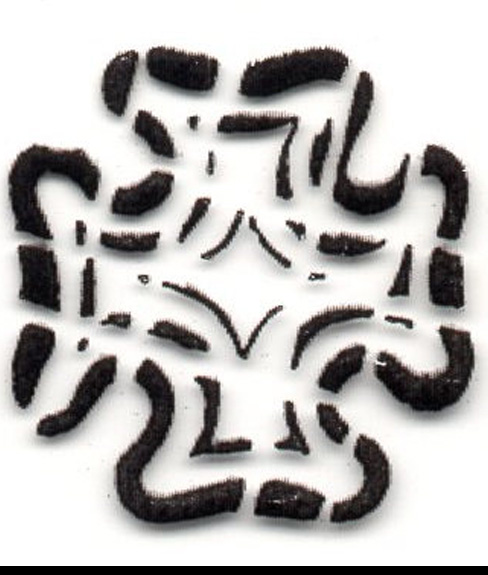
A guide to the distinctive Maltese Cross (MX) cancels

Aberdeen

Click the image to enlarge

Alderney

Click the image to enlarge

Ashton

Click the image to enlarge

Banff

Click the image to enlarge

Belfast

Click the image to enlarge

Brighton

Click the image to enlarge

Catterick

Click the image to enlarge

Channel Islands

Click the image to enlarge

Coleshill

Click the image to enlarge

Cork

Click the image to enlarge

Coventry

Click the image to enlarge

Dublin

Click the image to enlarge

Dumfries

Click the image to enlarge

Edinburgh

Click the image to enlarge

Greenock

Click the image to enlarge

Hollymount

Click the image to enlarge

Johnstown

Click the image to enlarge

Kelso

Click the image to enlarge

Kilmarnock

Click the image to enlarge

Kinallen

Click the image to enlarge

Leamington

Click the image to enlarge

Leeds

Click the image to enlarge

Lewes

Click the image to enlarge

Limerick

Click the image to enlarge

Manchester

Click the image to enlarge

Melksham

Click the image to enlarge

Montrose

Click the image to enlarge

Mullinger

Click the image to enlarge

North Allerton

Click the image to enlarge

Norwich

Click the image to enlarge

Oxford

Click the image to enlarge

Perth

Click the image to enlarge

Plymouth

Click the image to enlarge

Scotland
Large Diamond

Click the image to enlarge

Scotland
Small Diamond

Click the image to enlarge

Sterling

Click the image to enlarge

Stonehaven

Click the image to enlarge

Tadcaster

Click the image to enlarge

Tallow

Click the image to enlarge

Tarporley

Click the image to enlarge

Tunbridge Wells

Click the image to enlarge

Welshpool

Click the image to enlarge

Whitehaven

Click the image to enlarge

Wincanton

Click the image to enlarge

Wotton-under-edge

Click the image to enlarge

York

Click the image to enlarge

A guide to the 12 numbers in Maltese Cross (MX) cancels

#1

#2

#3

#4

#5

#6

#7

#8

#9

#10

#11

#12

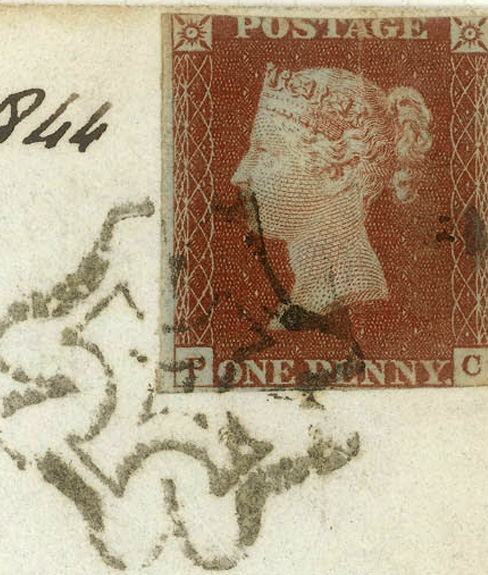
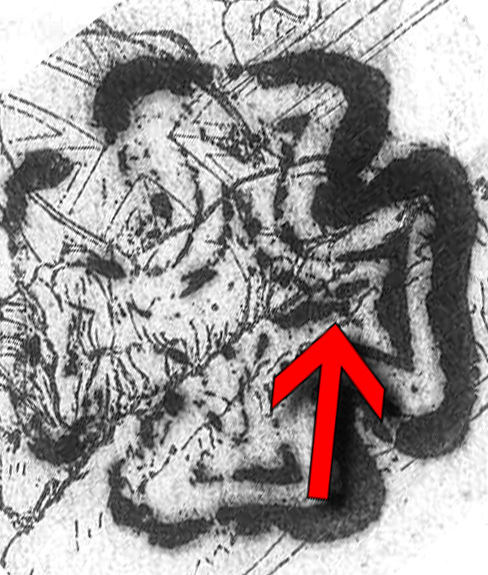
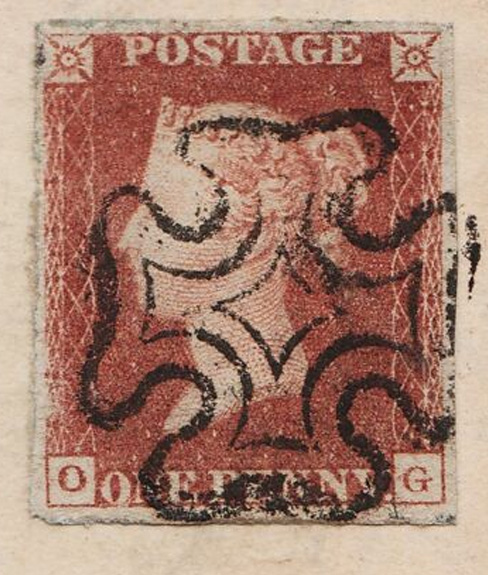
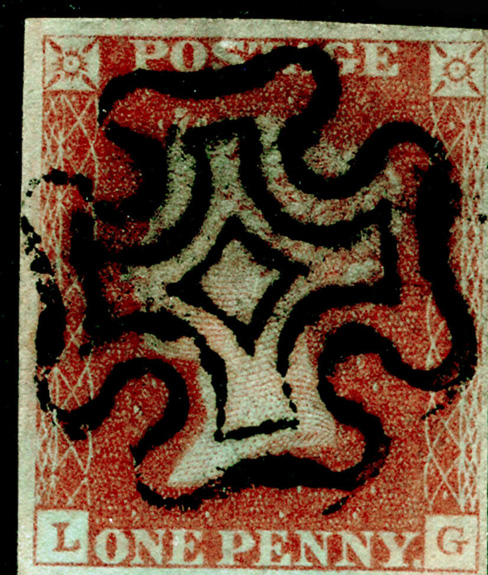
The purpose of adding a number to the Maltese Cross cancellation on British postage stamps, which began in March 1843 in London and more widely in 1844, was to identify the specific post office or postal worker responsible for cancelling the stamp. Internal Monitoring: In London (1843), the numbers 1-12 were introduced to the center of the cross, likely as a method to monitor the performance of specific postal employees at the General Post Office. They were superceded by bar cancels in 1844.

A guide to the colours of Maltese Cross (MX) cancels

Black

Click the image to enlarge

Blue

Click the image to enlarge

Bright Orange

Click the image to enlarge

Bright Violet

Click the image to enlarge

Brown

Click the image to enlarge

Brownish-Red

Click the image to enlarge

Lilac-Rose

Click the image to enlarge

Magenta

Click the image to enlarge

Orange-Brown

Click the image to enlarge

Orange-Red

Click the image to enlarge

Pink

Click the image to enlarge

Purple

Click the image to enlarge

Red

Click the image to enlarge

Ruby

Click the image to enlarge

Vermilion

Click the image to enlarge

White

Click the image to enlarge

Yellow

Click the image to enlarge

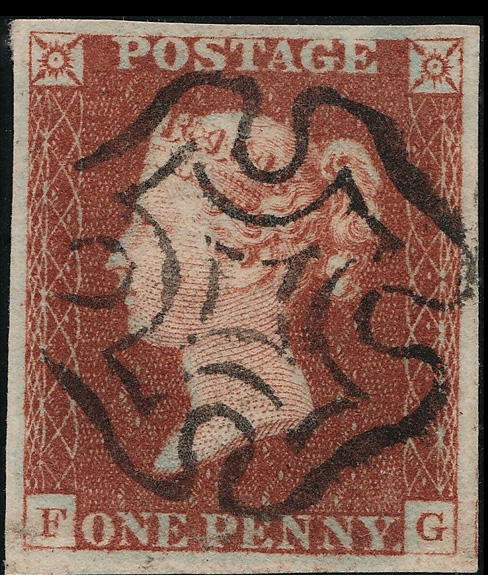
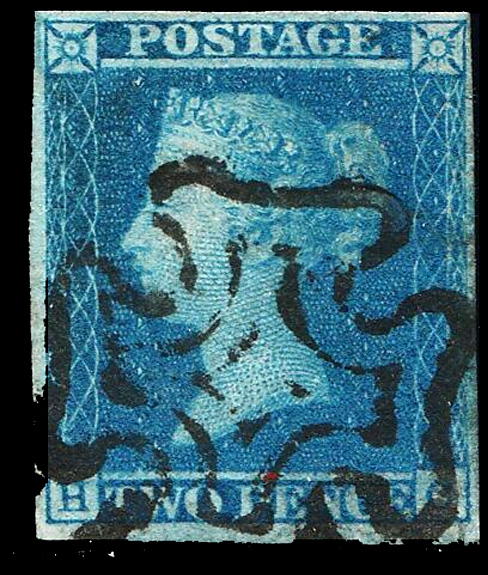
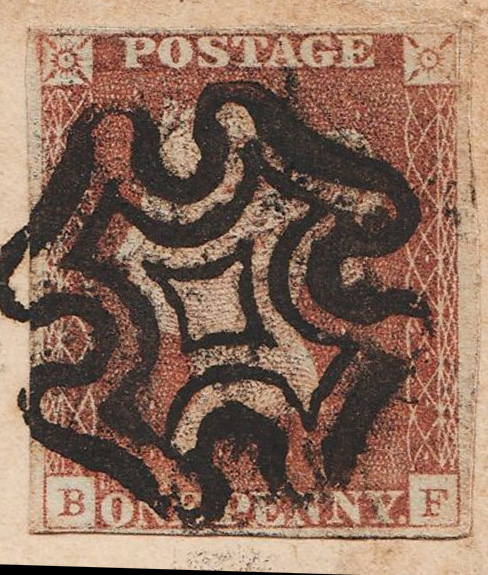
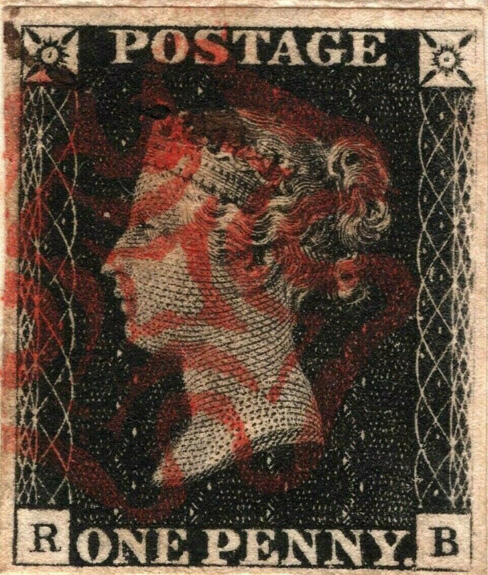
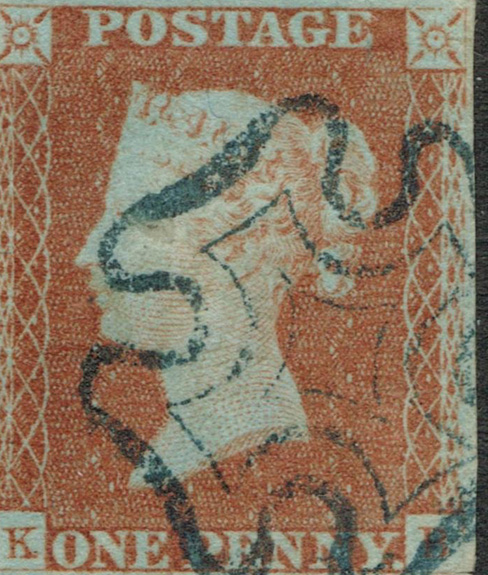
The Maltese cross cancel changed from red to black in February 1841 primarily to prevent fraud, as the original red ink was easily cleaned off the Penny Black stamps, allowing them to be reused. Switching to a more durable black ink, and subsequently changing the stamp color from black to red, ensured the cancellation could not be removed without damaging the stamp. The penny black was changed to the penny red in order to make the black cancel more visible.

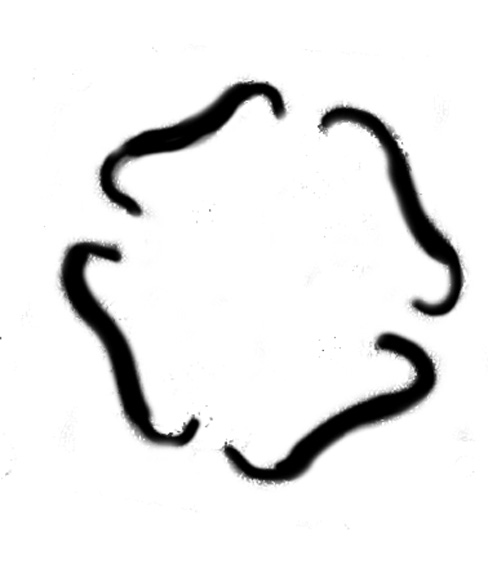
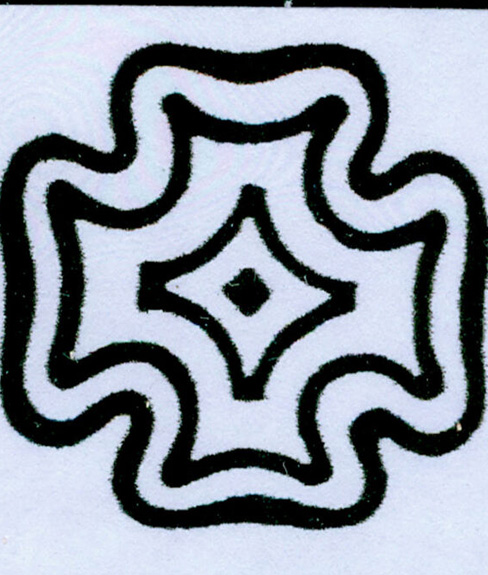
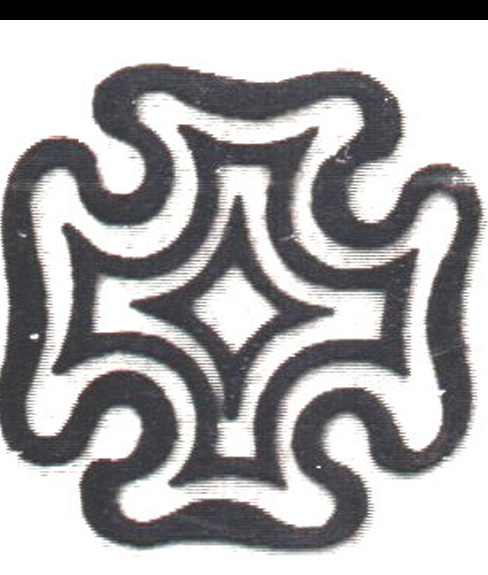
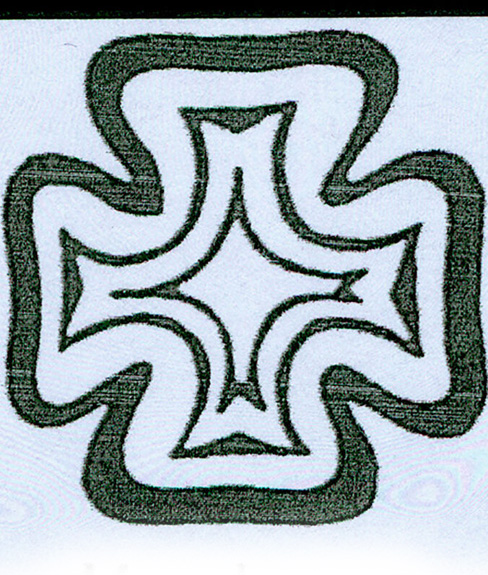
The eight points of the cross also represent the eight “lingue” (national groupings) of the Order's members, namely: Auvergne, Provence, France, Aragon, Castile and Portugal, Italy, Germany and England (with Scotland and Ireland). The complex, eight-pointed shape was designed to "obliterate" the stamp effectively so that the ink would be difficult to clean off, ensuring the stamp could not be used again

Top Image: Pall Mall, London 1840

GB STAMP GUIDE